
Cartagena's traditional food is Caribbean coastal cooking: coconut, yuca, corn, plantain, panela and whatever came out of the sea that morning. If you only have a few meals in the city, order posta cartagenera, an arepa de huevo, a carimañola and a whole fried fish with coconut rice. That covers the core of it.
We're across the bay on Barú Island, and guests ask us what they should eat on their day in town more often than almost anything else. This is the list we give them, with what each dish actually is, so you know what's arriving before it's on the table.
The dishes at a glance
| Dish | What it is | When people eat it |
|---|---|---|
| Posta cartagenera | Beef cooked dark and sweet with panela and clove | Lunch or dinner |
| Arepa de huevo | Fried corn arepa with an egg cooked inside | Breakfast or a street snack |
| Carimañola | Yuca fritter stuffed with beef, chicken or cheese | Breakfast, snack or starter |
| Fried fish | Whole fish, often mojarra, with coconut rice and patacones | Lunch, especially by the water |
| Cazuela de mariscos | Seafood stew with lobster, prawns, fish, clams and squid | Lunch or dinner |
| Sancocho | Beef, chicken or fish broth with potato, yuca and ñame | A long lunch |
| Chicharrón with yuca | Fried pork with a side of yuca | Any time |
| Agua de panela | Water, lemon and panela | Alongside any of the above |
Posta cartagenera: the city's own dish
Posta cartagenera is the dish Cartagena claims as its own: a cut of beef cooked down until it's nearly black, with panela (unrefined cane sugar) giving it a syrupy, sweet glaze and clove as the spice you'll notice first. It's served with coconut rice and usually an avocado salad.
Our view: if you order one thing in the walled city, make it this. It's rich, so it's a lunch dish rather than something to eat before an evening walk in the heat. Ask whether it comes with arroz con coco; it should.
Arepa de huevo and the fritos
An arepa de huevo is a corn arepa that's fried, opened, filled with a raw egg and fried again so the egg cooks inside. It's a fried snack from Colombia's Caribbean region, and some versions add shredded or minced beef alongside the egg. Cartagena takes it seriously enough to hold a Festival del Frito Cartagenero during the Fiestas de La Candelaria, and the arepa de huevo is the star of it.
This is breakfast or a mid-morning snack, eaten standing up. You'll see it alongside the other fritos at stalls in the old city. It's best eaten hot, within a minute of coming out of the oil.
Carimañolas: yuca, not pastry
A carimañola is a torpedo-shaped fritter made from boiled, mashed yuca, stuffed with ground beef, shredded chicken or cheese, then deep-fried until the outside is crisp and the inside stays soft. It's common across the Caribbean departments of Colombia, Bolívar included, where street vendors sell them and restaurants serve them as a starter.
They often come with suero (a soured cream) or ají picante on the side. Ask for the cheese version if you don't eat meat; it's the one we'd point a vegetarian towards.
Fried fish, coconut rice and patacones
The plate most visitors remember is a whole fried fish, often mojarra, with coconut rice and patacones (flattened, twice-fried green plantain). You'll find it on the beaches and in restaurants across the city.
We'd eat this by the water rather than in a dining room. The coconut rice is the real test of a kitchen here: it should be slightly sweet, faintly toasted, and never gummy.
Cazuela de mariscos
Cazuela de mariscos is a seafood stew made with whatever the sea has given: lobster, prawns, shrimp, fish, clams and squid are all typical. It arrives in its own pot and it's a full meal on its own.
Order it when you want to sit for a while. It's richer than it looks, so you won't need a starter.
Sancocho
Sancocho is the Caribbean coast's broth: beef, chicken or fish, boiled in a large pot with potatoes, yuca and ñame (a starchy root). In the villages around Cartagena it's still cooked over a wood fire.
This is a long-lunch dish, more common in homes and village kitchens than on a walled-city menu. If you see it offered, it's worth taking.
Chicharrón with yuca, and agua de panela
Chicharrón is fried pork, and on the coast it usually comes with a side of yuca. It's eaten at breakfast, lunch or dinner.
The drink to have with it is agua de panela: water, lemon and panela, sweet and sharp at once. Panela turns up again and again in this cooking, in the posta and in the drinks, and once you've noticed it you'll taste it everywhere.
Green mango with salt
Green mango with salt is one of the flavours locals name when they describe the city. It's a street snack: unripe mango, sour and crunchy, with salt. We'd buy it from a cart on a hot afternoon rather than look for it on a menu.
Where we fit in: lunch on Barú
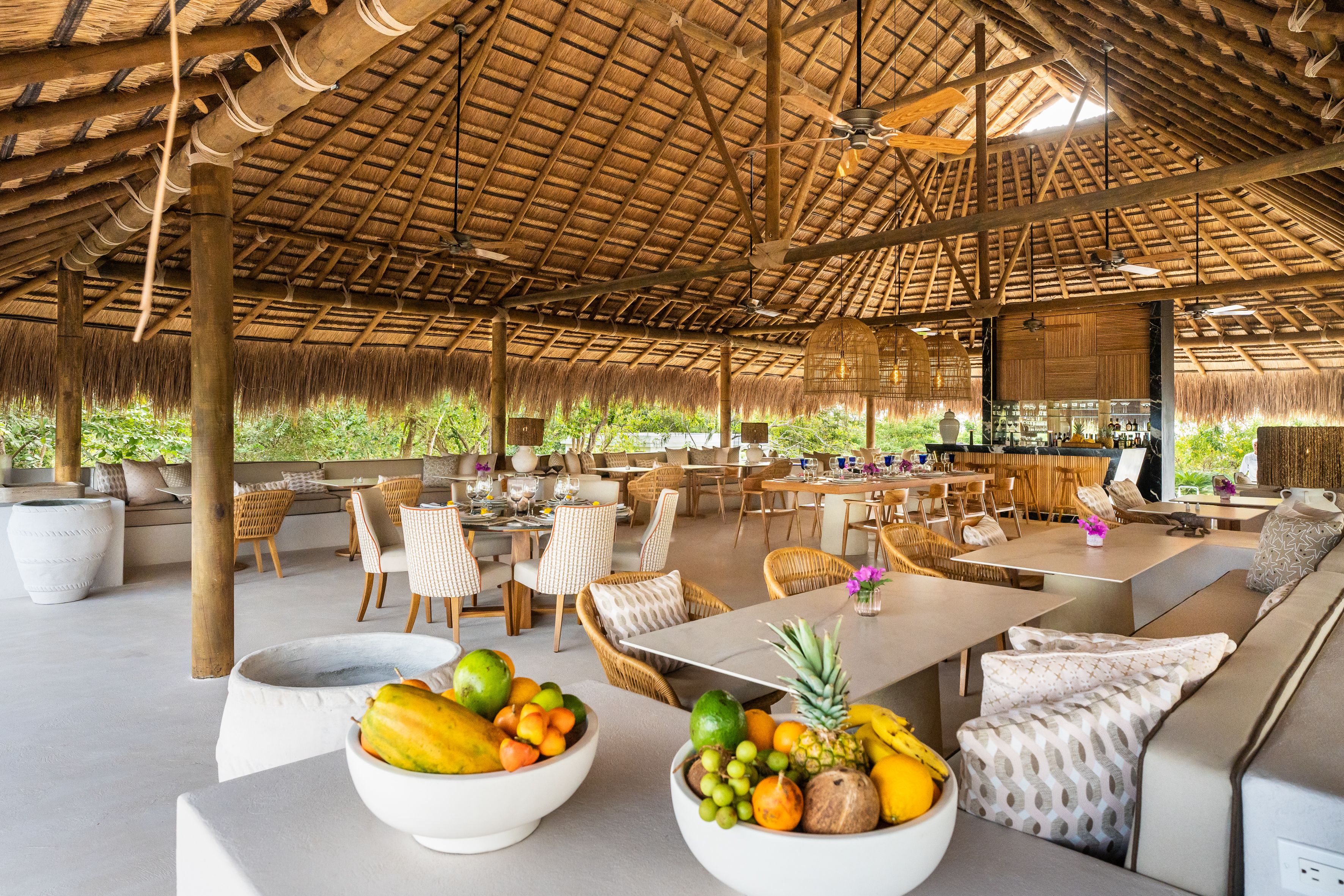
Our own restaurant, Ancalá Waterfront, isn't a cocina cartagenera, and we'd rather say so plainly. It's a BBQ kitchen on the Barú mangroves, run by our Executive Chef, Pedro Mosqueda, in a kitchen first built by Chef Silvestre Saiz Cortazar, who was born and trained in Ibiza and raised in the kitchens of Bogotá.
Ancalá Waterfront is open to our residents and to non-residents, and you can arrive by boat or by car. If you're coming over from Cartagena for the day, it's a reason to make the crossing. We keep a decent offering for vegetarians and vegans, and we know how many of you are lactose or gluten intolerant, so tell us when you book.
For posta, fritos and fried fish, our advice is simple: take a day in town for the classics, then come back to the island for lunch on the water with us.
Eating the classics in town
The walled city and Getsemaní are where most of these dishes are easiest to find in one afternoon. We've written separately about the tables we'd book in the walled city and about spending a day in Getsemaní, and both are linked below. Plan your eating around the heat: fritos in the morning, posta or cazuela at lunch, and a lighter evening.