

Kayaking is the thing we'd put first on your first morning here. The kayaks come with the house, the water in front of us is flat most mornings, and you don't need to book anything or leave the property to use them. You walk down, you get in, you go.
We should be plain about what this is and what it isn't. This is not a whitewater trip and it is not a guided eco tour with a clipboard. It's a quiet paddle through mangrove channels a few minutes from where you slept, in a bay most visitors to Cartagena only see from the deck of a passing boat.
Where you actually paddle
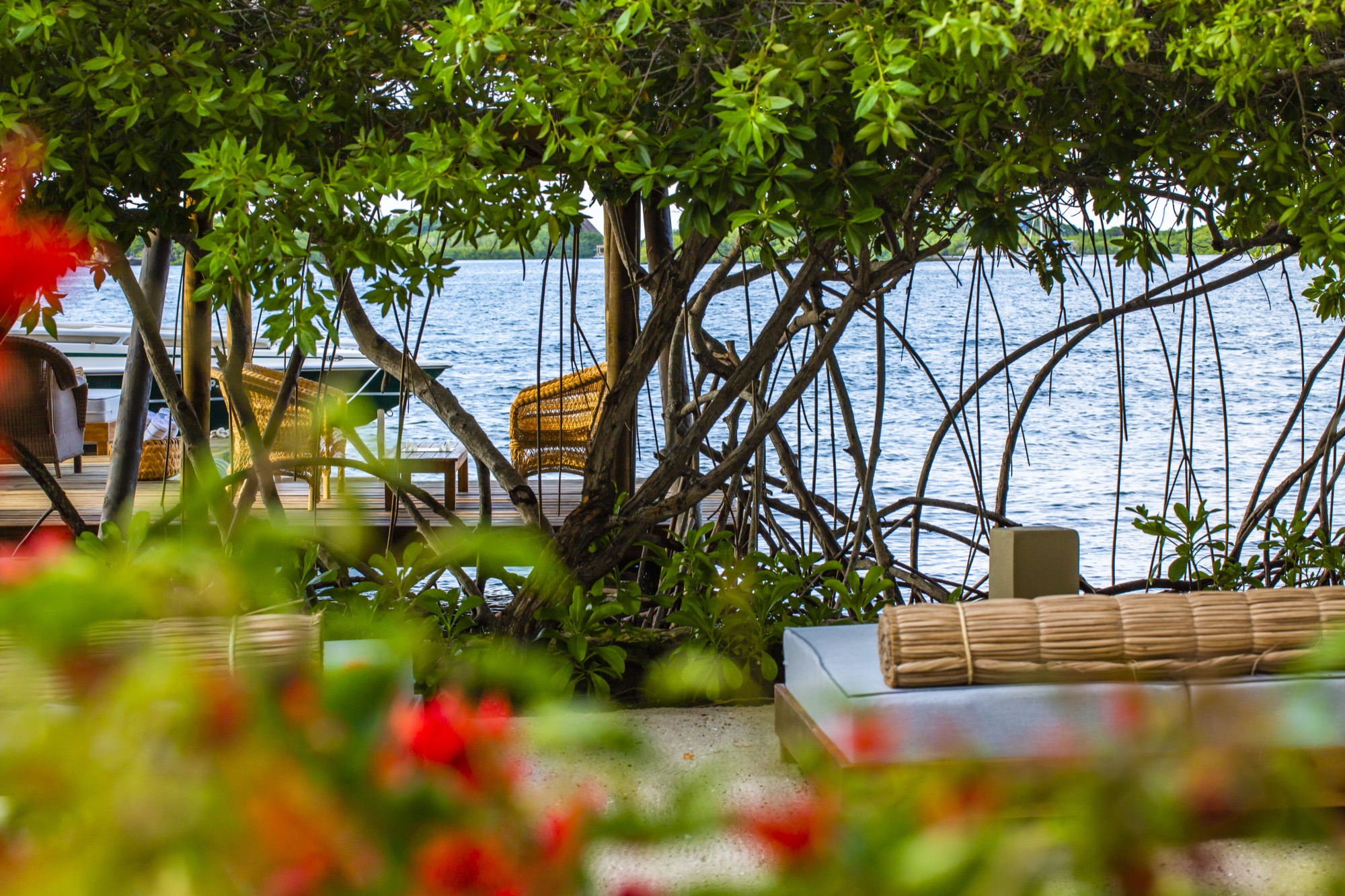
You paddle Bahía de Cholón, the bay we sit on, and the mangrove channels that fringe it. Our houses look out over the Ciénaga de Cholón from their balconies, so you can read the water before you commit to it: if the surface is glass, go; if the wind is up, have the coffee first and go later.
The mangroves are the reason the water is worth paddling rather than just swimming in. Mangrove roots grow out of the shallows in tangles, which makes narrow channels you can nose a kayak into and a nursery for whatever lives in the shallows. It is slow going by design. Anyone treating this as exercise will be disappointed; anyone treating it as forty minutes of looking at things will not be.
Sea access from the houses is direct, and it's also unguarded. There's no lifeguard and no marked swimming area, so swim and paddle at your own risk, and take a companion out with you rather than going alone at first light.
Go at dawn, and here's why
Dawn is the hour. The birdlife on Barú is loudest in the first hour of light, the bay is at its calmest before the day's boat traffic starts moving, and the heat hasn't arrived yet. Birdwatching from a kayak also works better than birdwatching from a terrace, because you can drift into the channels without the noise of walking.
If you are not a dawn person, the second-best window is the last hour before dark, for the same reasons in reverse. The middle of the day is the worst of it: hot, bright, and busier on the water.
What the kayaks are, and what we can arrange beyond them
The kayaks are part of the stay rather than a paid add-on, and they sit with the house you've booked. If you want to go further than the channels behind us, our concierge can arrange kayaking, snorkelling and birdwatching excursions. Ask us when you book rather than on the morning, because anything involving a boat needs planning around our own boat schedule.
We will not pretend to run a dive shop. What we have is a house on the water, kayaks, and staff who know who to call.
Getting here to do it
We're 30 minutes to an hour from Cartagena on our boat. Reserve your seat, because the boat has limited capacity and if you turn up unreserved and it's full, the wait for the next crossing is long. Door to door from Rafael Núñez International Airport to us is about an hour. Going the other way, leave us three hours before your flight departs.
That crossing is the reason a paddle here feels different from a mangrove tour booked in the old city. You are not being driven out for the morning and driven back. You're already here, and the kayak is thirty seconds from your bed.
What to bring down to the water
Sun cover is the one thing people underestimate. There is no shade in a kayak and the reflection off the bay doubles what you get. A hat, a shirt you don't mind soaking, and reef-safe sunscreen applied before you leave the room, not on the water.
Bring water. Leave the good camera unless you have a dry bag, because you will ship some water getting in and out. Shoes are optional and mostly a nuisance.
Where you sleep, if you're deciding
Six rooms across three houses, all of them within sight of this water. The Casita Veranera rooms, Rhizo and Avi, have a large balcony with a panoramic view of the Ciénaga de Cholón, which is the view you will be paddling into. Casita Laguna has its own private pool, an outdoor bathroom and a gazebo, and it's the most separate of the three houses. The main house holds the three Orquidea rooms, Estrella, Cuerno and Fuego.
Take the whole property as the Full House and all six bedrooms are yours, each with its own ensuite, up to fourteen people, with the pool, the rooftop terrace and the sea access to yourselves. The architecture is by Simón Vélez and Gustavo Pinto, in guadua bamboo and timber, which is worth knowing before you arrive so you understand why the houses are open to the air rather than sealed against it.