



The short answer: five nights
Five nights is the number we'd give anyone asking, and we'd split it two in Cartagena and three out here on Barú. That split exists because the old city and the islands are two different holidays, and trying to do the second one as a day trip from the first is where most Cartagena itineraries go wrong.
If you only have three nights, spend all three in the city and accept that you're seeing Cartagena rather than the coast. If you have seven, the extra two nights belong on the island, not in town.
Why four nights is the awkward number
Four nights tempts people into a day trip. You leave the city early, you cross open water, you get a few hours somewhere, and you cross back in the afternoon. What you've actually spent is a full day to buy a half day, and you've done the crossing twice.
The alternative costs nothing extra: move your bags. Sleep two nights in the walls, then come out and sleep the rest on the island. You do the crossing once each way and the sea stops being a commute.
What the city nights are for
The walled city is the part of Cartagena that most people picture, and two nights is enough to do it without hurrying. We've written separately about how it reads from out here, including what we'd point you at and what we'd skip. It's linked at the bottom of this page.
We'd keep one of those evenings unplanned. The old city is better walked than scheduled.
What the island nights are for
Three things, and none of them happen on a day trip.
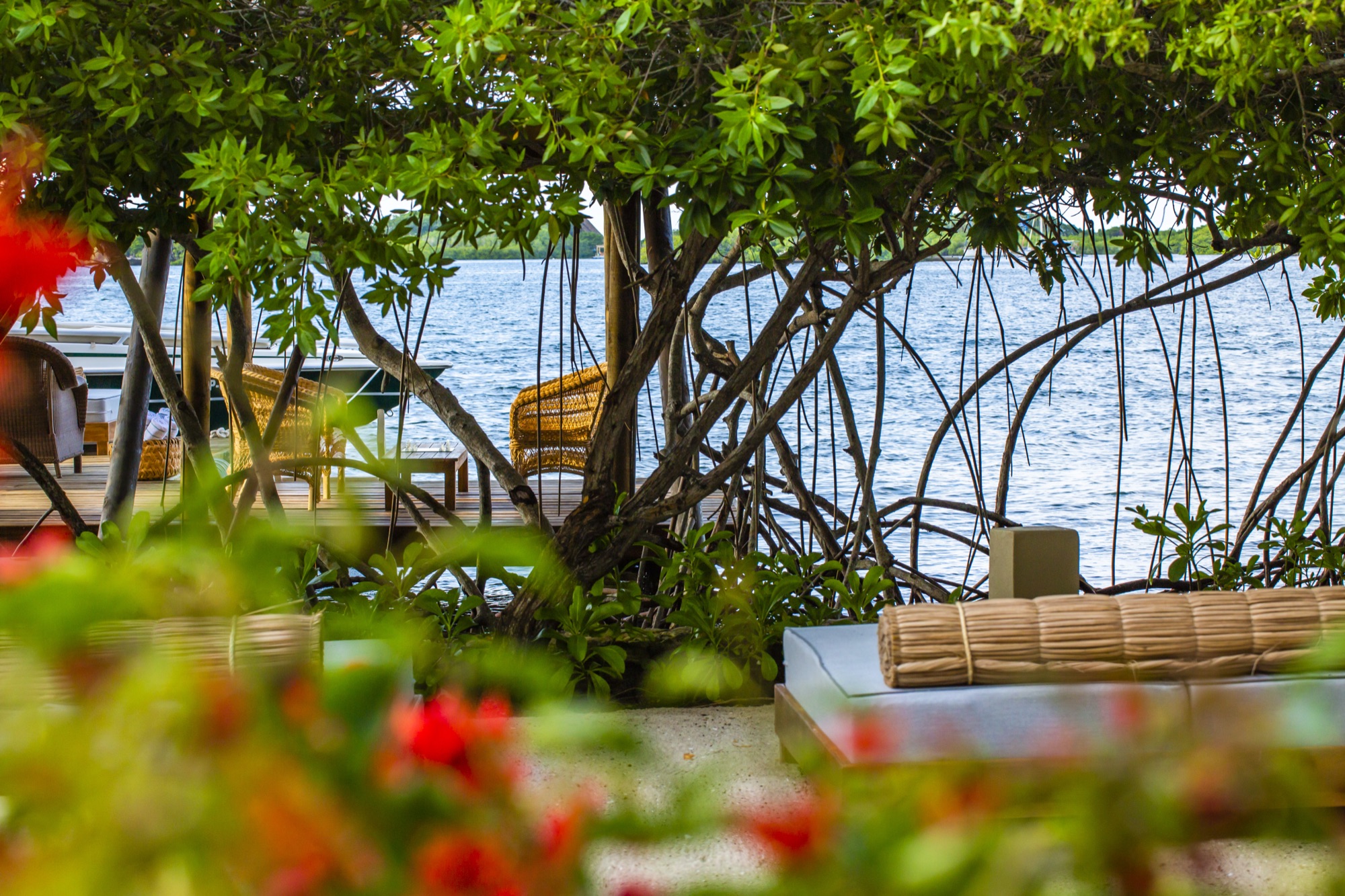
The mangroves at dawn. We're on Bahía de Cholón, and the channels behind us are kayaking and birdwatching water. The birds work early, which means this is a first-light outing and therefore something you can only do if you slept here. It's the thing guests tend to describe afterwards.
The reef. Corales del Rosario y San Bernardo is a national park off the southern end of Barú, and it's where the coral is. Starting from the island rather than from the city turns it from a long day into a short one.
Bocachica. A village with no running water and no paved roads, and more soul than you'll be ready for. Do not go expecting chic restaurants or bars. This is island life as it is actually lived, and it's worth your time precisely because nobody has arranged it for you.
The travel time you should actually budget
| Leg | Time to allow |
|---|---|
| Rafael Núñez airport (CTG) to us, door to door | 1 hour |
| Cartagena to Barú on our boat | 30 minutes to 1 hour, depending on the sea |
| Leaving us for a departing flight | Leave 3 hours before departure |
Two notes on that table. The boat crossing varies with the sea rather than with traffic, so treat the upper number as the planning number. And reserve the boat: it has a limited capacity, and if you arrive unreserved and there's no space, the wait for the next crossing is a long one.
Costs people forget when they count nights
Foreign residents pay no tax on hotel accommodation in Colombia. For Colombian residents, IVA is already included in what you're quoted. We charge a resort fee of 20 USD per night. City hotels are connected to public utilities and an island property is not, which is what that fee covers.
Where we fit, if you're weighing the island half
We're six rooms across three houses on Bahía de Cholón, built in guadua bamboo to designs by Gustavo Pinto, in the tradition Simón Vélez established for building with the material. Six rooms is the whole story, which is also why the place can be taken privately in full, and why we're able to cook around what people actually eat.
Our kitchen was built by Chef Silvestre Saiz Cortazar, born and trained in Ibiza and raised in the kitchens of Bogotá. Pedro Mosqueda has since taken over as Executive Chef. A fair number of us have been vegetarian or vegan at some point, so non-meat eaters are properly looked after here, and lactose and gluten intolerances are no trouble at all. Tell us when you book rather than when you sit down.
So: how many days?
Three nights if Cartagena is a stopover. Five if it's the trip, split two and three. Seven if you'd rather stop counting. The only arrangement we'd argue against is the one that keeps you in the city the whole time and buys the islands back as a day trip.