


What the weather is like in Cartagena in March
March is one of the driest months of the year in Cartagena. Long-term averages, processed from CRU, Met Office and Netherlands Meteorological Institute data, give the month these figures:
| March in Cartagena | Average |
|---|---|
| Daytime high | 31°C |
| Night-time low | 24°C |
| Monthly rainfall | about 6 mm |
| Days with some rain | 0 |
| Sunshine | 8 hours a day |
| Daylight | 12 hours |
| UV index (maximum) | 11+ (extreme) |
| Sea temperature | 27°C |
Heat and humidity are rated very high in every month of the year here, March included. What changes through the year is the rain, and in March there is almost none.
How March compares with the months around it
March sits at the end of the dry stretch that runs from December. February averages about 2 mm of rain, March about 6 mm, and April begins to turn, with around 34 mm and three days with some rain. By May the figure is about 102 mm across ten days. If you want the dry season and can choose your dates, the first three months of the year are the safest bet for it, and March is the last of them.
The sea is one point cooler than it is in the second half of the year: 27°C in March against 29°C from June through November. We would not call it cool. You'll swim without a second thought.
How we plan a March day on Barú
The answer is to work around the sun, because with a UV index of 11 or above, the middle of the day is the part to spend in the shade. This is roughly how we would lay out a day for you here.
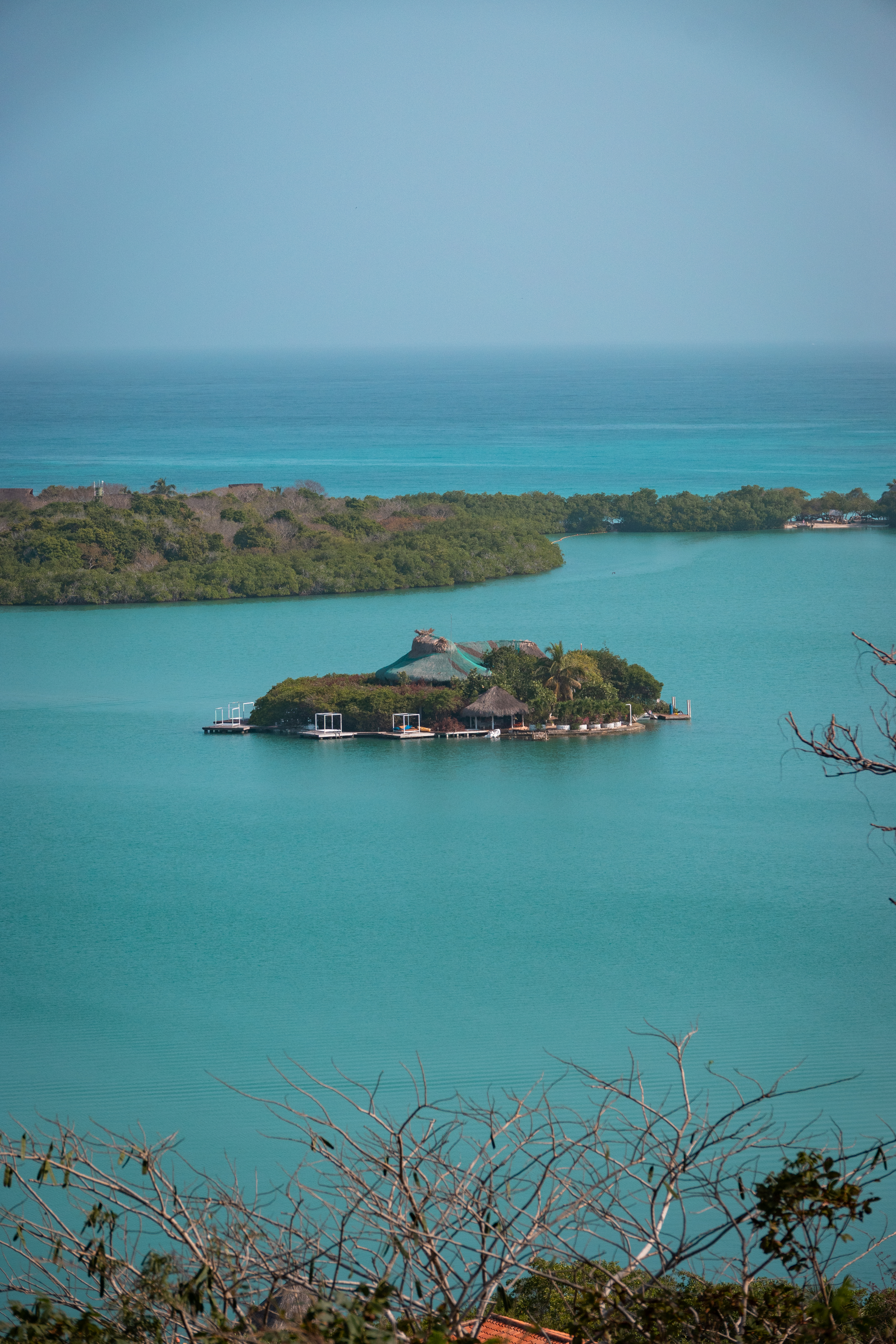
Early morning: the water. The first hours after sunrise are the coolest of the day and the best time to be out on the bay. From our waterfront deck you can swim straight into the sea, or take out a kayak or a paddleboard. The Barú Mangroves line this part of Cholón Bay, and paddling along their edge is something we'd do before the heat builds rather than after. Our page on kayaking the mangroves goes into what that is like from our shore.
Late morning to mid afternoon: lunch under a roof. Ancalá Waterfront, our restaurant, is open daily from 11am to 4pm, and that window lines up with the hottest part of a March day. Chef Pedro Mosqueda cooks a premium BBQ menu there, under a roof built in guadua bamboo and timber and open to the bay. It's open to non-residents as well, so if you're staying elsewhere and spending a day on the island, you can come by boat or by road.
Late afternoon: the city, or the deck again. If you want Cartagena's walled city, the late afternoon is when we'd send you. The stone streets hold the day's heat, and walking them at noon in March is hard going. Our walking tour of the walled city is timed with exactly this in mind.
Getting to us in March
The route to us does not change with the season. By boat, chartered from Cartagena, the crossing is around 40 minutes. By road, you drive or take a taxi along the Barú road past Playa Blanca. From Rafael Núñez International Airport to our door is about an hour, and when you leave, we suggest setting off three hours before your flight. We can arrange airport transfers in both directions, and we can help you arrange a boat. Contact us before you travel and we'll sort out the details.
A dry month is the easy one to plan a boat day around
With no typical rain days, March is a month where you're unlikely to lose a planned day on the water to the weather. Corales del Rosario National Park, the protected reef and island system offshore from Barú, is the boat day most people ask us about. Our page on the park explains what it is and what it looks like from here.
What to bring for March
Pack for sun, not rain. A UV index of 11 or above means reef-safe sunscreen, a hat and a light long-sleeved layer for the boat are worth more than a rain jacket this month. Evenings sit around 24°C, so you won't need anything warm. Our packing list for Cartagena and the islands covers the rest.
Is March a good time to visit Cartagena?
Yes, if you want dry weather. March has close to the lowest rainfall of the year and eight hours of sunshine a day. The trade-off is the same heat you'll find in any month, around 31°C by day, and a sun strong enough that we plan every day around it. If dry and hot suits you, March is a sound choice, and the quiet of the bay on Barú is a good counterweight to the city.