

Where the reef actually is
The snorkelling near Cartagena is in the Corales del Rosario y San Bernardo National Natural Park, the protected archipelago that sits off the southern end of Barú Island. It is not something you do from the city's own waterfront, and it is not something you do from a beach lounger. You get on a boat. The operators who sell the trip out of Cartagena describe reefs holding more than forty species of coral, which is the reason the park is protected in the first place.
That single fact reorganises a Cartagena itinerary more than people expect. The reef is roughly an hour of open water from the old city, so a snorkelling day bought in Cartagena is a full day: an early start at the tourist dock, a crossing out, a few hours in the water, and the same crossing back in the afternoon chop.
How far it is from us
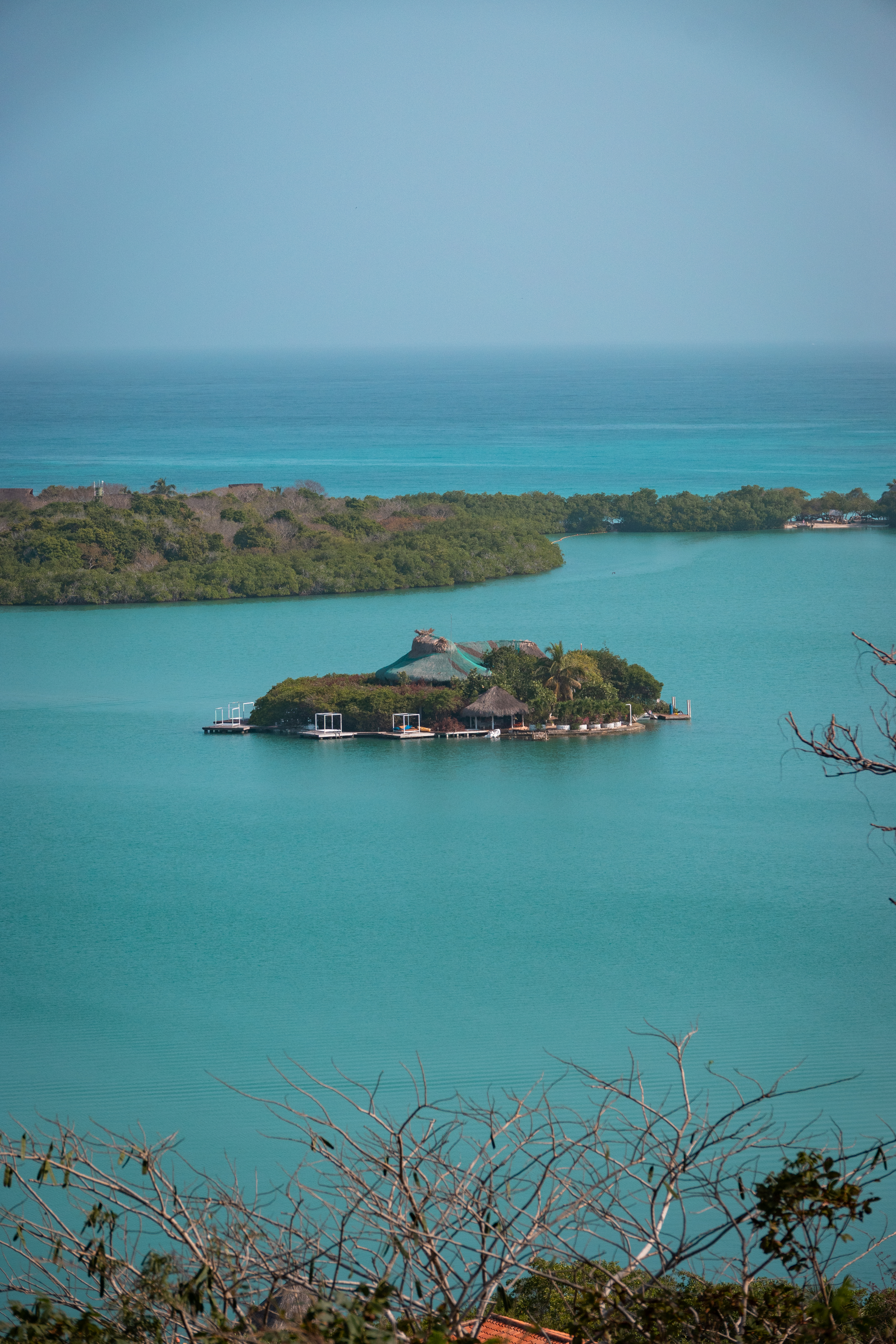
We're already out here. We're on Bahía de Cholón, on Barú Island, and our boat crosses between Cartagena and us in thirty minutes to an hour depending on the sea. From Rafael Núñez airport, door to door, allow an hour. Going the other way, we ask guests to leave us three hours before a flight departs.
The practical difference is not the saving in minutes. It's that you're starting the day already past the city, on the same side of the water as the archipelago, rather than crossing it twice to get there and back.
What the water is, island by island
The archipelago is not one place with one kind of water, and it is worth knowing which part you've been sold.
The reef itself. This is the point of the park and the reason to bring a mask. Coral, in numbers, in water clear enough to justify the boat. Trips that call themselves snorkelling trips should be putting you over it rather than anchoring off a beach for lunch.
The oceanarium. There's a large aquarium built on one of the islands in the archipelago, and it appears on most day-trip itineraries. Be aware that its entry and its extra activities are frequently not covered by the price of the boat trip you booked. Travellers report paying again at the gate. If a captive-animal attraction isn't what you came for, you can say so and stay on the boat.
The mangroves. Different water entirely, and the reason we're where we are. The Barú mangroves are channels rather than open sea, which is kayaking and early-morning birdwatching rather than snorkelling. Dawn is when the birds are working. We've written about what that paddle is actually like on a separate page, linked below.
Four things to settle before you pay
- Is the national park fee included? Corales del Rosario is a national park and operators handle the fee differently. Ask before you hand over money, not at the dock.
- How many stops, and how long in the water? A day sold as snorkelling can quietly turn into a lunch stop with twenty minutes of swimming attached. Ask for the time in the water, in minutes.
- Is the gear included, and has anyone checked it? A leaking mask ends the day early. If a trip provides equipment, ask whether you can try it before the boat leaves.
- What happens if the sea is up? The crossing is open water. A good operator will tell you plainly what the cancellation terms are.
Go early, and reserve
Go early. Bahía de Cholón, our own bay, fills with day boats out of Cartagena as the day gets on, and the archipelago follows the same rhythm: the morning belongs to people who are already here, and the afternoon belongs to everyone else.
If you're coming to us for it, reserve first. Our boat has a limited capacity, and if you turn up unreserved and there's no space, the wait for the next crossing is a long one. That matters more than it sounds on an island.
Who we are, briefly
We're six rooms across three houses on Bahía de Cholón, built in guadua bamboo to designs by Gustavo Pinto in the tradition of Simón Vélez. The reef is the public attraction; the mangroves are the quieter thing on our own doorstep. Most guests end up doing both, and in our experience the mangrove morning is the one they talk about afterwards.